It’s that time of year, folks. The temperature has dropped to a cool 79 degrees. Teachers are posting Amazon wish lists. Flip-flops are swapped for clean tennies that won’t stay clean for long. It’s back-to-school time!
Which means, for me, that one-of-a-kind, stomach-flip-flop feeling of walking through those double doors on the first day.
I loved that feeling. I loved the sudden clatter of everyone reuniting at once, I loved (and was simultaneously humiliated by) the subtle and not-so-subtle sizing up of everyone’s style and bodily changes, I loved taking in the familiar smell of old books and stale bleach and chalk.
Maybe I’m romanticizing (I know I’m romanticizing) but that’s because some part of me understood school as a setting for adventure. When I was a kid, I read stories taking place at school almost as much as I went to school, and I believe those stories helped me process why I was there: not just to learn and be tested on abstract concepts, but to learn and be tested as a person. When you think about it, school is the perfect place to set a story, because its diverse challenges will always force our heroes to leave their comfort zones. It’s full of mentors, allies, enemies, and wacky side quests. It’s is torturous and rapturous and everything in between.
Only a tiny portion of The Year of Second Chances takes place at a school, but it was one of my favorite flashbacks to write. Robin is in her first year of at the University of Minnesota, feeling homesick and overwhelmed. In the wake of devastating news, she spots a familiar face. It turns out that Gabe Carr, the extroverted poli-sci nerd from her small town high school, is also feeling homesick and overwhelmed. In the lobby of their dorms, they spend all night talking. The happenstance of the dorm environment presents them with potential. The pressures of freshman year bond them like two complementary chemicals. Their connection is so strong and so immediate, they become each others’ shadow through college, post-college, all the way until Gabe becomes Robin’s husband and, eventually, her late husband. This is where we meet Robin in the present: mourning Gabe after his battle with cancer, refusing to leave the comfort of their shared home, knowing she’ll never move on; she’ll never be able to recreate that spark of electricity she and Gabe found at college, those perfect-imperfect conditions for falling in love.
If the rest of the book had gone Robin’s way, she would still be on her couch today. There are very few structures in place that “test” adults in the way school does, very few in-depth programs where the sole goal is to grow and learn (and they’re not trying to sell you something). Parenting is certainly one, and work can be another, but if we’re lucky enough to have a relatively stable life, we can fall so deep into habit that our routines swallow our entire selves. We can too easily set up our lives in such a way that we are reacting to the same stimuli over and over: same routes through town, same shows, same food, same challenges. How lucky were we to have school? Even if the academic structure wasn’t for you, everyone was still privy to a wealth of newness every year. Our brains must have looked like a fireworks display.
In that spirit, maybe you can find a new set of double doors to open during this back-to-school season in the form of a juicy narrative. First, if you haven’t already read The Year of Second Chances, now is a great time to pick it up for two reasons:
- There’s a new edition available! The paperback is perfect for shoving in your bag as you explore a new neighborhood, or for one-handed reading as you try a new snack.
- If hardback is more your speed, Barnes & Noble is featuring The Year of Second Chances in their annual Book Haul until September 2, which means half off the original cover price! Considering this is a story about remaking one’s life after death (with a little help from a dating app), it would make a great gift for anyone who’s going through a transition, trying to reinvent themselves, or perhaps looking for a little nudge in that direction.
Now, here are five more books set in schools that will expand your reading taste, your horizons, and possibly even your definition of “educational”:
The Secret Place by Tana French
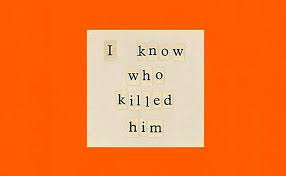
Stephen Moran gets his long-awaited chance to join Dublin’s Murder Squad when sixteen-year-old Holly Mackey arrives in his office with a clue to the unsolved murder photo of a boy at her all-girls boarding school: a photo of the victim with the caption, “I KNOW WHO KILLED HIM.” What follows is an re-opened investigation by Moran and his partner Antoinette Conway that gets tangled at every turn, by the interference of Frank Mackey, Holly’s father, who happens to be their boss; by the complex friend group politics at St. Kilda’s; and my favorite element, by the rumors of witchcraft among the girls that start to seem more and more real. The foggy, fecund boarding school setting closes in on the two outsider detectives, who often try and fail to keep their wits about them as they search for justice.
Read for a book that checks every “dark academia” box, with echoes of Practical Magic, Agatha Christie, and even the Salem Witch Trials.
Stephen Florida by Gabe Habash

Where do I even begin? This is probably the weirdest book I’ve ever read, but also, somehow, one of the most realistic. At a North Dakota college, our protagonist Stephen, a standout college wrestler, is about to enter the most important season of his life. Literally. Stephen cannot (and will not) picture a future after college wrestling. He eats, breathes, and sleeps to serve his athletic goals. But several unexpected circumstances—including an injury, a girl, a broken friendship—force him off his path, and the resulting behavior is so baffling you can’t look away; he goes on a journey of self-discovery that is deeply strange and deeply familiar, hopeful and tragic all at once.
Though I’ve never been obsessed with a sport—or anything—like Stephen has, I have also never read such an accurate portrait of the way the world suddenly bottoms out when the steadying, eternal-seeming rhythms of college are disrupted. I’m thinking of that terrible summer after freshman or sophomore year when you return home and have no idea who you are or what to do with yourself, or those weird lulls between semesters where all the social and academic pressure suddenly disappears, and a void of meaning opens up, and you feel you have no choice—out of boredom or otherwise—to look into it. Some of us handle this better than others. Some of us wander through January on an empty campus, fierce Northern winds blowing between buildings, a low sun in a gray sky, and start to imagine ourselves in a world more mythical and dangerous than it really is. Or is it?
Pick up Stephen Florida if you’re ready to have a completely unique and brand new reading experience, but not an exceedingly difficult one. For how offbeat Stephen’s perspective on the world is, the narration is paced well and accessible enough to be immersive.
Before Twitter was bought by a delusional billionaire who turned it into his personal bulletin board, it used to be a heck of a place for comedians and writers. Brandon Taylor was (and still is) one of those brilliant, hilarious Twitter people.
Real Life is his semi-autobiographical novel about being a gay, Black doctoral student in a predominantly white, Midwestern city. The book takes place over a weekend after the novel’s scientist protagonist, Wallace, discovers one of his experiments has gone wrong, and is starting to suspect one of his fellow students of sabotage.
Read for a witty, razor-sharp perspective on the parts of adulthood that bring out those first-day-of-school feelings, good and bad: finding belonging, building mutual trust, and how we choose (consciously and unconsciously) to present ourselves. And the best part is, most of these observations are taking place at the cornerstone of any campus novel: parties. Not just any parties, but grad school parties. As a former graduate student myself, let me tell you, graduate students are ten times more stressed than undergrads, have often built up ten times more resentment and sexual frustration, and have ten times more to lose. Taylor has clearly lived this, and his precise prose leaves it all on the table.
The Unlikely Disciple: A Sinner’s Semester at America’s Holiest University by Kevin Roose

Among certain audiences (namely those who read The New York Times), Kevin Roose is known for his reporting on technology, the effects of social media, and young people. What many people do not know is that Mr. Roose, then a baby reporter at Brown University, decided to spend a semester at Liberty University—an institution that could be considered the opposite of Brown—and wrote a book about it. If you’re not familiar with Brown, it’s like the rebellious artsy stepson of the Ivy League. If you’re not familiar with Liberty, it’s like a person at a Bible study who is so loud and intense about their interpretation of the Bible, it makes everyone else at the Bible study uncomfortable.
I will not go into Liberty’s complicated history (mostly at the hands of its late founder, Jerry Falwell, and his questionable influence in U.S. politics; or the sexual and financial scandals of his son Jerry Falwell, Jr.), but I will say this book is so fascinating because Kevin gets to witness, and even participate, in the ripples of this shocking history in real time. And hey, you’d think a “coastal elite” liberal would spend the entire book mocking and/or criticizing Liberty’s conservative, evangelical policies and student body, but you’d be wrong. While Roose doesn’t shy away from exploring how these policies and course options affect his fellow students, he actually finds himself becoming deeply attached to his Christian friends (and girlfriend!), and even questioning his own atheistic beliefs.
Talk about getting out of your comfort zone! Read for a carefully observed, gripping, fish-out-of-water story that has the open sincerity of a memoir and the occasional suspense of a undercover spy thriller.
You Know You Love Me by Cecily von Ziegesar
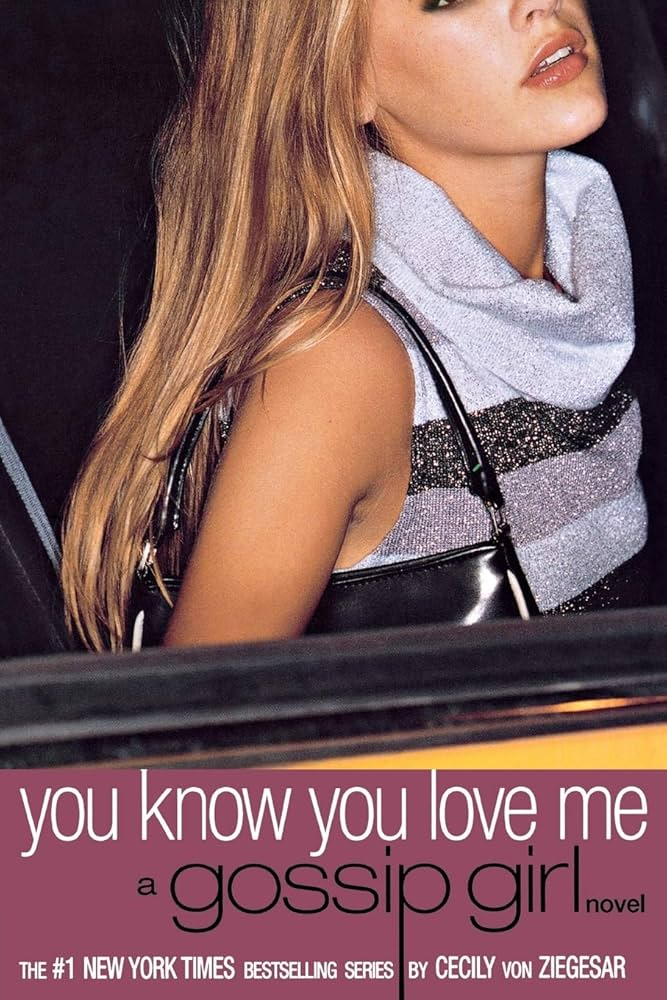
Yes, this is a Gossip Girl novel, and I’m not apologizing for it. Behind the slick, soap opera plots and 2006-era fashions of the TV adaptation, there is a series of gritty, addictive, Wharton-esque novels about class, corruption, and loyalty among NYC private school students, and they were among my favorite indulgences as a teenager.
Unlike the TV show, the wealth disparity between the Upper East Side shoe-ins and the Brooklyn scholarship kids is tangible, often devastating, and a constant source of conflict. Through multiple points-of-view, we see typical teenage drama about dates and clothes (and, of course, gossip) unravel into existential questions about destiny, hedonism, sexuality, the definition of true friendship, and one of my favorites: the dizzying freefall of having to parent oneself through adolescence when there are few limits to one’s power, financially or otherwise. This first book is a light, fun introduction to the series which grows deeper and darker as our protagonists age.
Keep in mind that these books were written before trigger warnings or sensitivity readers were a thing, so prepare for some unchecked body dysmorphia, disordered eating, and insensitive language. The series also includes a few instances of sexual assault, which is addressed, but probably not in the way we would handle it in 2024. Read when you’re looking to gobble up a book in an afternoon or a day, and you want to spend that day in an edgy, technicolor, Clueless-style fantasy about a high school experience like no other.
 Lara Avery